

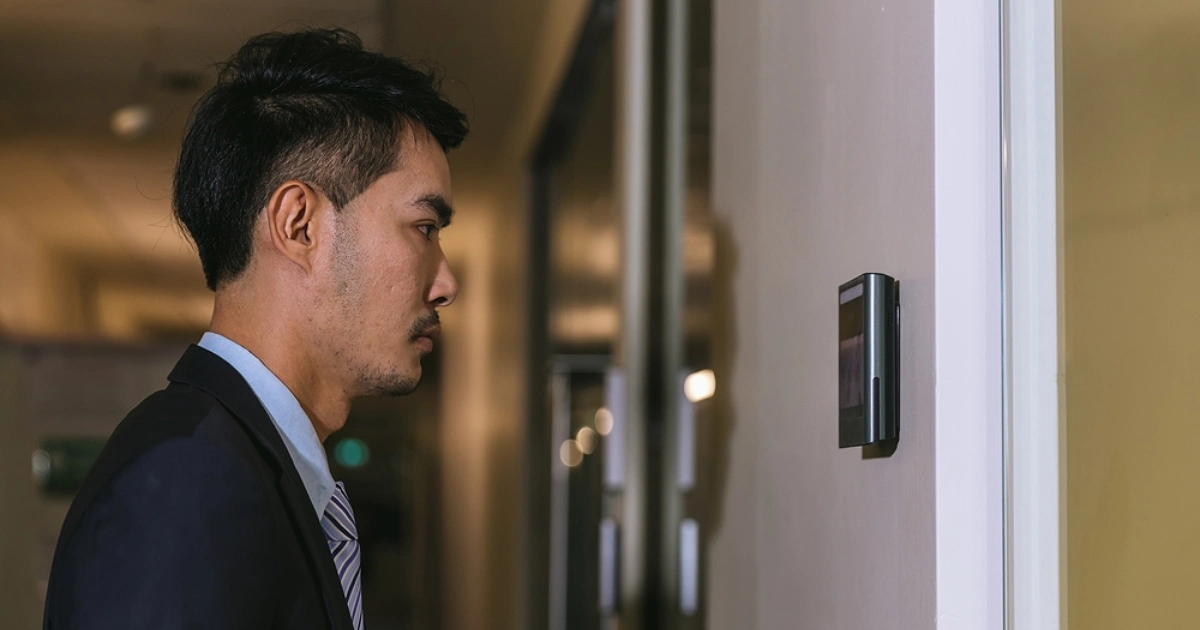
Be honest. How secure is your office right now?
Your office has a security guard at the front desk. A paper register for visitor sign-ins. A bunch of physical keys for different rooms. And a manual punch card system for attendance.
Sounds familiar?
Now ask yourself how easy it would be for someone to walk into a restricted area without being noticed? Or for an employee to sign attendance for a colleague who never showed up?
Traditional security systems are no longer sufficient. Offices are growing. Teams are bigger. Data is more sensitive, and the risks are very real.
This is the reason a growing number of businesses are adopting smart access control systems as a core part of their office security strategy in 2026. It is not just about locking doors. It is about knowing who is where, when, and why in real time.
How Does an Access Control System Help Corporate Offices?
An access control system for corporate offices works in a simple, repeatable process:
- Employee or visitor presents a credential either fingerprint, face, RFID card, or PIN
- System verifies the identity instantly, without any manual checking
- The door or gate opens or denies access based on assigned permissions
- Entry and exit records are stored automatically with time, date, and location
- Admin reviews reports anytime on a dashboard or mobile app
No paper. No guesswork. No delay.
9 Reasons Every Corporate Office Needs a Smart Access Control System
1. Prevents Unauthorized Access
This is the biggest reason to invest.
A smart access control system for offices only allows verified individuals to enter. No valid credential means no entry. Whether it is an unknown visitor, a former employee, or an unauthorized vendor, the system automatically blocks them.
According to a report by MarketsandMarkets, the global access control market is growing rapidly because businesses are waking up to how vulnerable traditional entry systems really are.
2. Protects Sensitive Office Areas
Not every employee needs access to every room. A smart system lets you lock down:
- Server rooms: IT staff only
- Finance departments: authorized finance team only
- HR records rooms: HR personnel only
- Executive floors: senior management only
- Inventory and storage rooms: operations team only
- CCTV and control rooms: security staff only
You decide who gets in: The system enforces it.
3. Improves Employee Attendance Accuracy
Manual attendance is a headache for most HR teams. Buddy punching, missed entries, and paper mistakes eat up hours every week that no one can afford to lose.
Biometric and facial recognition systems handle this completely. Every entry is tied to the actual person, so there is no room for proxies or errors. HR gets accurate, real-time attendance data automatically, with zero chasing required.
4. Supports Role-Based Access Control
Not everyone in your office needs access to every room. Role-based access control solves this by giving each employee permissions that match their role.
- HR staff get access to the HR office and records room
- IT staff can enter the server room and tech storage
- Managers have access to executive areas and meeting rooms
- Visitors are limited to the reception, lobby, and designated meeting rooms
This simple system makes a big difference by keeping important areas secure. Therefore, employees can easily access the spaces they need for their work.
5. Provides Real-Time Entry and Exit Logs
Every single entry and exit is logged in real time.
Management may find out who entered a forbidden zone, when, and how long. Internal reviews, compliance audits, or investigations benefit greatly from this audit path.
No more asking the guard what happened.
6. Makes Visitor Management More Secure
Visitors, vendors, and guests are a major security gap in most offices.
A smart access control system for offices lets you:
- Issue temporary access for a specific time window
- Log every visitor entry and exit
- Restrict movement to allowed areas only
- Revoke access the moment the visit ends
No more random visitors wandering into restricted zones.
7. Reduces Dependence on Manual Security Processes
Of course, this saves real money.
Guards no longer need to manually check IDs, log visitors on paper, or verify every employee entry. The system takes care of all of this automatically, freeing your staff to concentrate on actual security rather than paperwork.
According to IBM’s Cost of a Data Breach Report, human mistakes and poor physical security are repeatedly among the main causes of costly security breaches in companies.
8. Helps Manage Hybrid and Flexible Workplaces
Modern offices are not 9-to-5 anymore. Employees come in on different days, at different hours, with different access needs.
A smart access control system is built to manage all of this with ease.
- Set time-based access for different shifts
- Allow department-specific timings
- Give occasional visitors limited one-time access
- Track who came in and when, even across multiple locations
9. Creates a More Professional Corporate Environment
This one does not get talked about enough.
The way people enter your office says a lot about your business. A fast, keyless entry leaves a lasting impression on clients, new hires, and partners. No awkward waits at reception. No digging through bags for a key card. Just a smooth process that reflects the kind of organisation you are.
Smart Access Control vs. Traditional Office Security
| Feature | Traditional Locks / Manual Registers | Smart Access Control System |
|---|---|---|
| Identity verification | Weak | Strong (biometric, face, card) |
| Entry records | Manual | Automatic and real-time |
| Visitor tracking | Limited | Full logs with timestamps |
| Lost key/card risk | High | Easily deactivated remotely |
| Attendance accuracy | Manual errors possible | 100% verified and auto-recorded |
| Access permissions | Hard to manage | Role-based and easy to update |
| Restricted areas | Less secure | Fully controlled |
| Reporting | Difficult | Dashboard with instant reports |
The difference is obvious. In the long run, smart systems are less expensive, perform better, and eliminate the possibility of human error.
Which Types of Smart Access Control Systems Are There for Corporate Offices?
Biometric access control: It relies on fingerprint recognition. Ideal for busy high-security locations with regular personnel.
Facial Recognition Access Control: Face recognition attendance machine allows touchless entry. This setup works perfectly for busy doorways or places that need to stay extra clean.
RFID Card-Based Access Control: Employees tap a card or fob for a fast and simple experience that works well for large teams.
Door Access Control Systems: Smart locks for individual doors. Great for small offices or specific rooms.
Security Barriers and Turnstiles: Smart Security Gates are useful for busy workplaces. Common in lobbies and parking areas.
CCTV with AI-Based Monitoring: This setup connects camera feeds directly with access control. It identifies unusual behavior in real time.
Explore our full range of access control devices and decide which solution suits best for your office.
What Should You Check Before Installing a Smart Access Control System?
Use this checklist before making any purchase decision:
- How many entry points and doors do you have
- Total number of employees
- How many visitors and vendors come in daily
- Which departments need restricted access
- Whether you need attendance tracking
- Your preferred entry method: card, face, or fingerprint
- Whether it needs to connect with your HR or payroll software
- Power backup in case of outages
- Who needs admin access, and what reports do you need
- Room to expand as your team grows
Getting this right from the start saves time, money, and headaches later.
Talk to our team to get a customized recommendation.
Frequently Asked Questions
Does biometric access control outperform RFID cards?
Yes, for most offices. Biometric systems verify the actual person, not just a card that anyone can carry. RFID cards are simpler and cheaper but carry a higher risk if lost or stolen.
Can access control systems track employee attendance?
Yes. Every entry and exit is recorded with a timestamp. This data can be exported or integrated directly with HR and payroll software.
Where should access control be installed in a corporate office?
Start with the main entrance, server rooms, finance and HR departments, executive floors, and any restricted storage areas.
Can access control systems work with CCTV cameras?
Yes. Modern systems integrate with CCTV to give you a complete view of who is where and what is happening, all on one dashboard.
Conclusion
Corporate offices in 2026 cannot afford to rely on outdated locks, paper registers, and manual security checks. The risks are too high, and the inefficiencies are too costly.
A smart access control system for offices solves all of this. It keeps unauthorized people out, tracks attendance accurately, and protects sensitive areas while giving management full visibility, all in real time.
Whether you are running a small office or a multi-floor corporate building, an access control system for corporate offices is no longer a luxury. It is a necessity.
Visit FlowFiz to explore smart access control systems built for modern corporate offices.