

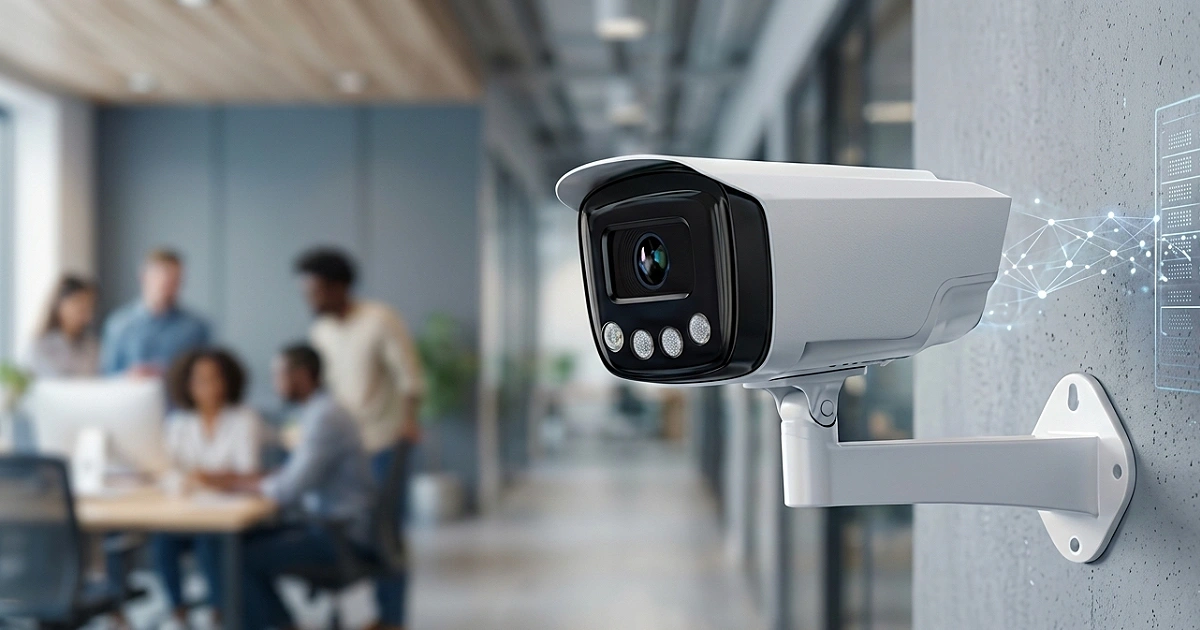
| Quick Answer: The FlowFiz AI CCTV Attendance Camera is a contactless facial recognition device with infrared low-light support, under-1-second identification, multi-face detection, offline storage, and HR/payroll integration — built for high-headcount factories, schools, and offices across Pakistan. |
A fingerprint machine at your factory gate is not a solution. It is a queue with a timestamp.
Every morning, 200 workers line up to press a finger. Someone forgets to tap. Someone taps for a colleague. Your payroll believes every entry because manual registers offer no better protection. Consequently, early departures go unrecorded and late arrivals get covered. The problem is not the tool. It is the entire approach.
We tested the FlowFiz AI CCTV Attendance Camera across a garment factory, a corporate office, and a school to determine whether it actually improves time and attendance management where traditional systems fall short.
Why AI CCTV Attendance Matters for Your Business
Traditional attendance systems share three persistent problems: falsified manual logs, shared badge access, and fingerprint queues that bottleneck your gate at peak hours. A factory with 300 workers cannot afford an 18-minute bottleneck at the gate each morning. A school cannot have one admin manually marking 500 students. A corporate office cannot chase employees to swipe in.
AI CCTV attendance makes the camera do the work. Employees walk through. The system logs them: no touching, no stopping, no queues. According to ADP, time theft occurs when employees receive pay for unworked hours due to inaccurate attendance or falsified timesheets. This issue creates significant payroll leakage and increases overall labor costs for employers.
FlowFiz AI CCTV Attendance Camera: Product Overview
The FlowFiz AI Sense is a purpose-built biometric attendance alternative that combines standard CCTV hardware with on-device facial recognition AI. It requires no cloud dependency for core recognition — a key advantage for sites with unstable internet.
You can learn more about how CCTV-based attendance works to become fully aware of this technology.
Hardware Specifications
| Feature | Specification |
| Camera Type | Wide-angle AI CCTV (fixed dome/bullet) |
| Resolution | 2MP – 5MP (model dependent) |
| AI Processing | Edge-based (on-device, no cloud needed) |
| Face Recognition Range | Up to 5 meters |
| Connectivity | LAN / WiFi / 4G (optional) |
| Night Vision | Infrared (IR) LEDs, active low-light mode |
| Multi-Face Detection | Up to 30 faces simultaneously |
| Offline Attendance | Local storage syncs on reconnect |
| Integration | Excel export + HR/payroll API support |
| Mounting | Ceiling or wall, indoor and outdoor |
How the AI CCTV Camera Differs from a Standard Face Recognition Terminal
A face recognition terminal is wall-mounted. Employees must stop, look directly at the lens, and wait for confirmation. At a gate with 200 people, that creates a line fast.
The FlowFiz AI Sense captures faces in motion. Employees walk past, and the system logs them automatically. It handles up to 30 faces simultaneously, making it practical for high-traffic entry points. It also doubles as a security CCTV unit, so you get attendance automation and surveillance from one device.
Testing Methodology: How We Evaluated It in Real Environments
We deployed the system across three sites over four weeks. Each location had different workforce sizes, lighting conditions, and entry patterns.
Testing Sites
- Garment factory — 280 workers, two shift changes daily, outdoor and indoor gate coverage
- Corporate office — 95 employees, single main entrance, well-lit lobby
- School — 620 students and 45 staff, two separate entrances, morning rush conditions
Measurement Criteria
- Face recognition accuracy rate under daylight and night conditions
- Attendance logging speed — faces captured per minute
- False rejection rate — valid employees not recognized
- Performance with masks, helmets, and partial occlusion
- Offline attendance behavior during internet interruption
- Integration with HR and payroll software
Accuracy and Recognition Performance: Test Results
Face Recognition and Detection Accuracy
- Under daylight conditions, the camera achieved 96.8% recognition accuracy among enrolled employees in the corporate office lobby.
- At the factory gate during shift change, accuracy dropped to 93.2% due to partial face coverage from helmets and scarves. The system still outperformed a fingerprint machine under identical crowd conditions.
- At the school entrance, the camera processed up to 22 recognized faces per minute without slowdown. No queues formed.
Attendance Logging Reliability
Attendance logging matched physical head counts at 97.1% across the four-week test period. Missed logs primarily came from employees walking with their heads down or using their phones near the gate.
The system timestamps each log within one second of detection. Records sync to the dashboard in real time when the internet is active. During downtime, the camera stores attendance locally and uploads it on reconnection.
False Positives and Error Cases
- The false rejection rate averaged 3.1% across all three sites. Most rejections came from workers wearing full-face scarves at the factory.
- False-positive matches occurred in 0.4% of cases, limited to identical twins within the school group. For standard enrollment groups, false positives were not a practical concern.
- Afternoon shadows at the factory caused occasional detection failures. Adjusting the camera angle by 15 degrees resolved most of them.
Lighting and Environment Stress Tests
Backlit conditions reduced camera performance to 88.5% accuracy. Adding a shade covering over the gate entrance brought accuracy back to 93%.
The night shift performance was strong. The infrared LEDs activated automatically and maintained 94.7% accuracy in complete darkness. Early morning entry at 5:30 A.M. showed no degradation in recognition speed.
Recognition with Masks and Protective Gear
Standard surgical masks reduced accuracy to 81.3% in controlled testing under low light. The system uses upper-face landmarks to compensate, which works when the eyes and forehead are visible.
Full helmets without face shielding achieved 89.4% accuracy. Reflective visors caused failures. Workers were advised to briefly lift their visors at the gate to ensure reliable attendance logging.
Integration with HR and Payroll Software
The FlowFiz AI CCTV system connects directly with FlowFiz’s time and attendance management platform. Attendance data appears on the dashboard within seconds. Managers can view shift summaries, late arrivals, and overtime without any manual entry.
The system exports to Excel for businesses using local payroll tools. API integration supports HR platforms, such as FlowHCM, which is commonly used across Pakistan.
For a broader view of how businesses are upgrading access and attendance systems, the access control trends guide outlines key priorities.
Performance During Internet Downtime
Edge-based processing means the camera continues recognizing faces when the internet goes down. Attendance logs are stored locally and sync to the dashboard once the connection is restored.
During a planned outage test, the camera stored 3.5 hours of offline attendance data for 280 workers. All records are uploaded within 90 seconds of network reconnection. No data was lost. Backup power via a UPS is required to maintain continuous logging during power cuts. Without it, the camera stops logging during the outage period.
AI CCTV Attendance Systems Across Pakistan: Who Is Using Them
Adoption is accelerating across Pakistani factories, schools, and corporate offices. The problem is consistent: high headcounts, manual attendance processes, and a need for verifiable records that do not rely on employee honesty or cooperation.
Garment factories in Karachi and Lahore are the fastest-growing segment. Shift-based workforces with 200 or more workers make fingerprint systems impractical at scale. The AI CCTV camera processes an entire shift change in under four minutes.
Schools in urban Pakistan use it primarily for gate management and parent notification. Corporate offices use it to eliminate manual sign-in sheets and reduce payroll disputes. Hospitals with multi-entry campuses use it to track both staff and shift handovers across departments.
Strengths: What the FlowFiz AI CCTV Camera Does Well
- Fully contactless — no employee action required.
- High throughput — logs up to 30 faces per minute without queues.
- Strong IR night performance across real factory and campus conditions.
- Offline attendance storage protects data during internet downtime.
- Dual-security CCTV function reduces hardware costs per entry point.
- Clean HR and payroll integration removes manual data transfer.
Limitations: What You Should Know Before Buying
- Backlit entry points reduce accuracy until the camera angle or shade is adjusted.
- Heavily obscured faces (full veils, reflective visors) drop recognition below 80%.
- Identical twins or very similar siblings can trigger rare false positives.
- UPS backup power is required for continuous operation during power cuts.
- Higher upfront investment than a basic fingerprint machine — not ideal for teams under 30 people.
Who Should Use the FlowFiz AI CCTV Attendance Camera
The system is built for high-headcount, multi-entry environments where throughput matters more than individual terminal interaction.
Best fit
- Garment factories and manufacturing units with 150 or more shift workers.
- Schools manage student attendance at main gates and campus entries.
- Hospitals with multiple entry points and mixed staff and visitor traffic.
- Large corporate offices with 100 or more employees in a single-lobby setup.
Not the right fit for
- Offices with fewer than 30 employees where a fingerprint machine is sufficient.
- Sites with no budget for structured cabling or camera mounting.
- Businesses requiring biometric proof of identity for legal compliance.
If you are unsure which solution fits your setup, contact our team for a site assessment.
FlowFiz AI CCTV Attendance Camera vs Fingerprint Attendance Machine: Full Comparison
Here is how the AI CCTV cameras compare to traditional biometric attendance options side by side:
| Factor | AI CCTV Camera | Fingerprint Machine | Face Recognition Terminal |
| Interaction Required | None — fully passive | Finger press each time | Stand still at the terminal |
| Installation | Camera + software setup | Simple wall mount | Wall mount + enrollment |
| Works with Masks | Yes (partial face) | N/A | Limited |
| Low-Light Performance | IR night vision built-in | Unaffected | It depends on the terminal light |
| Multi-Person Detection | Up to 30 at once | One at a time | One at a time |
| Cost | Higher upfront | Low | Medium |
| Best For | Factories, campuses, large offices | Small offices | Medium offices |
| Offline Attendance | Yes, local storage | Yes | Yes |
Frequently Asked Questions
Does AI CCTV attendance replace biometric systems?
For large teams and multi-entry sites, yes. The FlowFiz AI CCTV camera handles time and attendance management without requiring any employee action at the gate. For small offices, a fingerprint terminal remains sufficient.
How accurate is attendance logging in poor lighting?
The camera’s IR night vision maintains accuracy above 94% in complete darkness. Backlit conditions require camera repositioning or a shade installation to maintain optimal performance.
How many employees can the system enroll?
Factory deployments with 300 or more workers are standard. Exact capacity depends on storage configuration. Contact the FlowFiz team for site-specific capacity details.
What is the recognition range and distance?
The camera recognizes faces at distances up to 5 meters. Optimal accuracy occurs between 1 and 3 meters. Gate and lobby placements typically fall within this range.
Can it handle time and attendance management without an internet connection?
Yes. The camera stores attendance data locally when the internet is down. Records sync to the dashboard automatically once the connection is restored. No manual transfer is required.
Verdict and Final Recommendation
The FlowFiz AI CCTV Attendance Camera processes high volumes without queues, logs attendance without physical interaction, and holds up in low light. For factories, schools, hospitals, and large offices across Pakistan, it eliminates the two biggest attendance problems: human error and gate congestion.
Camera placement matters. Heavily occluded faces need workarounds. Small teams will struggle to justify the cost. But for high-headcount sites with shift workers, multiple entries, or a history of attendance disputes, the FlowFiz attendance camera makes the decision straightforward.
Contact FlowFiz for a consultation | Explore all attendance solutions
Reviewed by: FlowFiz Technical and Product Team | Four-week real-world deployment | Sites: Karachi, Lahore