
Looking at your monthly payroll and realizing you are paying for hours of complete silence.
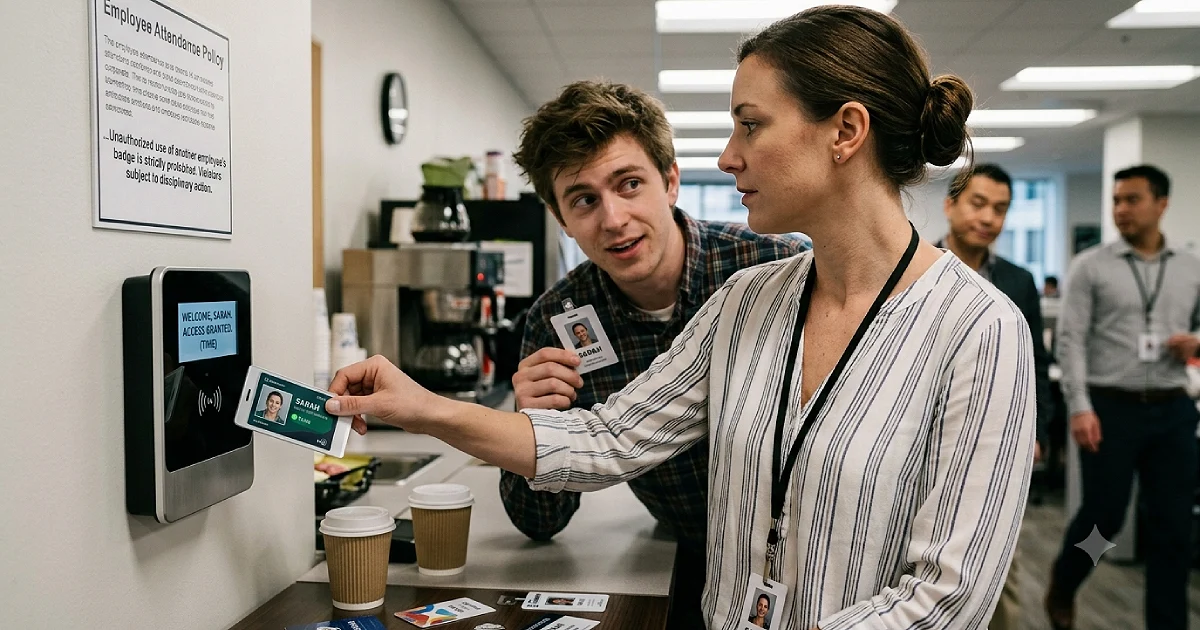
Every single month, thousands of rupees slip through a loophole right at your front door. It happens in seconds. A card swipes, a PIN is entered, or a name is signed, but the employee is not actually there. Your business is buying ghost labor, and your current attendance system is writing the check.
This is buddy punching. It is one of the oldest forms of employee dishonesty; most companies unknowingly pay for it.
Whether you run a manufacturing floor in Lahore or a corporate office in Karachi, attendance fraud costs you money. The real solution is not more rules. Security experts agree that reliable hardware is the best path forward. This comprehensive handbook explains what buddy punching is, why it happens, and exactly how to prevent it through secure identity verification.
What Is Buddy Punching?
Buddy punching is simply when one worker checks in or out for another. A late or absent employee is compensated for the hours they did not actually work. The digital attendance record looks completely normal, yet the company suffers direct financial loss.
It is a widespread form of payroll fraud. It thrives because standard tracking systems rely on shareable credentials like plastic cards, PIN codes, or paper logs. Most managers do not discover this time theft until the end of the month, long after the financial damage is done.
Common Examples of Buddy Clocking or Buddy Punching
According to research from the American Payroll Association, time theft remains a significant payroll challenge for employers. Here are the most common methods employees use:
- A worker swipes an absent friend’s RFID card at the entry gate before they arrive.
- One team member types a coworker’s security PIN into a shared time clock.
- Factory laborers take turns signing names for late friends in a manual book.
- Remote staff shares application passwords to mark attendance on mobile apps.
These methods make records look perfect. However, you can eliminate credential sharing by upgrading to secure Biometric Attendance devices.
The Cost of Buddy Punching
The financial impact of this habit is significant. Time theft costs employers hundreds of millions of dollars annually. Losing just fifteen minutes per shift across a workforce adds up fast.
Consider a firm with 50 employees, where 5 people arrive late every day but have a friend clock them in. Over a single week, that equals hours of paid ghost labor. You pay for full weeks of unearned vacation over the course of a year. Poor tracking also skews company data, resulting in payroll mistakes and poor planning decisions.
Also Read: What Is Time and Attendance Management? Complete HR Manager’s Guide
How Buddy Punching Happens in the Workplace
Most time tracking systems verify what a person carries rather than who the person actually is. This single loophole allows fraud to continue.
| System Type | Core Verification Method | Vulnerability Level |
| Paper Register | Handwritten Signature | High (Easily faked/backdated) |
| PIN / Password | Memorized Code | High (Easily shared text) |
| RFID Badge | Proximity Chip | High (Card can be handed over) |
| Biometric Scan | Physical Feature | None (Tied to real identity) |
Paper Timesheets and Manual Registers
Manual attendance books are incredibly easy to manipulate. Any worker can write someone else’s name. Entries are often backfilled or changed before a manager reviews the log. Since managers cannot carry out routine spot inspections, patterns of fraud may go unnoticed for months.
Punch Cards, PINs, and Passwords
PIN-based clocks are slightly better than paper, but codes are shared freely in shift-based environments. Punch cards have the same problem. One person grabs two cards, slides them into the terminal, and logs two people in simultaneously. Digital passwords shared over messaging apps allow similar abuse for off-site workers.
RFID Cards and Access Badges
Many factories and offices install smart security gates to handle building entry. Unfortunately, an RFID card only proves possession. It does not prove identity. Employees pass their badges to coworkers in the parking lot so that one individual can activate several records while others wait outside.
Why Buddy Punching Is a Serious Problem for Businesses
Leaving this issue unchecked harms your enterprise in five distinct ways:
- Direct Payroll Losses: Paying staff for hours they never actually worked directly inflates operational expenses.
- Hidden Productivity Costs: Overall output drops when employees realize that lateness carries no penalty.
- Inaccurate Resource Data: Corrupted records lead to poor decisions regarding hiring, project timelines, and future budgeting.
- Compliance Risks: In highly regulated sectors, inaccurate time records can lead to labor law violations during official audits.
- Cultural Damage: Honest workers who follow the rules become resentful when they see peers get away with fraud.
Also Read: Top 10 Access Control Trends to Watch in 2026
How to Stop Buddy Punching
Stopping this practice requires clear communication and robust hardware solutions.
1. Educate Employees on Attendance Policies
Clear expectations reduce workplace violations. Make sure every team member knows that buddy punching is a very serious type of fraud. In your company handbook, list the disciplinary actions. Post reminder notices near time clocks to keep policies fresh in everyone’s mind.
2. Use Biometric Time Clocks
This remains the most effective method for preventing buddy punching. Biometrics replace transferable badges with unique physical traits. A fingerprint cannot be shared, and a face cannot be borrowed.
You can deploy rugged fingerprint devices for manufacturing floors or contactless facial recognition devices for clean corporate settings. These devices ensure absolute clock-in verification.
3. Implement GPS or Mobile Attendance Tracking
For field staff or distant sales teams, use location-verified mobile applications. Geofencing tools restrict clock-ins to specific coordinate zones on a map. An employee cannot mark themselves present while sitting at home if the system requires them to be inside the designated field office radius.
4. Enable Real-Time Monitoring and Alerts
Modern tracking software spots anomalies automatically. If a single device registers two separate workers within two seconds, the system flags it. Automated alerts let managers address suspicious habits instantly, stopping minor infractions from becoming regular behavior. You can enhance this setup by using CCTV attendance cameras for visual confirmation.
Also Read: CCTV Attendance VS Biometric Attendance: A Complete Comparison for Modern Workplaces
5. Integrate Payroll and Attendance Systems
Manual data transfer leaves room for errors and unauthorized edits. Connecting your verification hardware directly to your payroll software creates a tamper-proof pipeline. The data remains locked from the moment of the scan until the final paycheck is calculated.
6. Create a Transparent and Trust-Based Culture
While tech stops the action, a healthy company culture reduces the motivation behind it. Ensure your scheduling is fair and realistic. When management communicates openly and enforces rules equally, workers feel respected and have less reason to bypass the system.
Technologies That Help Stop Buddy Punching
Modern security hardware eliminates human error from the verification process.
AI and Facial Recognition-Based Attendance Systems
Advanced facial recognition devices use anti-spoofing technology to prevent identity fraud. These systems detect liveness, meaning an employee cannot hold up a printed photo or video to trick the scanner. For high-traffic lobbies, smart cameras scan multiple moving faces simultaneously without creating long queues.
Geofencing for Remote and Field Teams
Geofencing uses mobile GPS to establish digital boundaries around work locations. This tech is a cornerstone of time theft prevention for logistics and construction field teams. It ensures that the field staff are physically at the site before their shift clock activates.
Cloud-Based Time Tracking
Cloud connectivity unifies multi-branch enterprises. Executives can view live attendance logs from any office location via a single dashboard. This removes the need to wait for weekly spreadsheet reports from regional managers.
Choosing the Right Anti-Buddy-Punching System for Your Business
Every facility requires a specific approach tailored to its environment and traffic flow.
Factory and Industrial Environments
Industrial zones deal with dust, moisture, and massive shifts in rush. Heavy-duty fingerprint tools built for rough conditions work best here. To handle high volumes, pair your readers with physical barriers such as full-height turnstiles or heavy-duty tripod turnstiles to manage crowd access smoothly.
Office and Corporate Environments
Corporate buildings prioritize speed and design. Wall-mounted facial scanners offer a fast, modern experience. Integrating these scanners with automated flap barriers or elegant swing barriers allows verified staff to move through the lobby without slowing down.
Schools and Hospitals
Hospitals and schools require high hygiene standards and rapid movement. Touchless facial readers allow medical staff to check in without touching a surface while wearing gloves. This speed prevents bottlenecks during critical morning shifts.
Also Read: Why Every Corporate Office Needs a Smart Access Control System
Frequently Asked Questions
Is buddy punching illegal?
It is treated as fraud or a breach of the employment contract. In Pakistan, employers can take disciplinary action under local labor laws. Many local enterprises classify buddy clocking as a terminable offense.
Is buddy punching considered time theft?
Yes. Receiving compensation for unworked hours is a form of theft. HR departments and legal compliance teams treat it as a serious ethical violation.
How to identify buddy punching at a workplace?
Look for consistently perfect clock-in times from staff members who regularly arrive late to their desks. You can also spot anomalies by cross-referencing your digital time logs against security gate camera footage.
Can biometric systems eliminate buddy punching?
Yes. Because physical traits cannot be shared or duplicated, biometric hardware closes the credential-sharing loophole entirely.
Which industries are most prone to buddy punching?
Shift-based industries with high employee counts face the greatest risk. Manufacturing, retail, construction, logistics, and healthcare facilities are common targets.
Conclusion
Buddy punching is a serious operational leakage caused by outdated tracking methods. Systems that rely on passwords or cards only verify what an employee carries, leaving your payroll vulnerable to fraud. Modern identity-based hardware solves this permanently. Upgrading to biometric clocks or smart cameras protects your profits while building a culture of workplace accountability.
Are you ready to secure your workplace attendance? Contact FlowFiz today for a professional hardware consultation tailored to your building layout and team size.